Food Servers, Nonrestaurant
Summary
$33,110/year
Median Pay
267,840
Number of Jobs
1.1%
Job Growth(%)
2,946
Job Growth(#)
Food Servers, Nonrestaurant - A Comprehensive Job Description
What They Do
Food servers in nonrestaurant settings perform the essential task of providing food services in environments that diverge from traditional dining establishments. These professionals operate in a variety of settings, including hospitals, schools, correctional facilities, cafeterias in corporate offices, and other institutional establishments. Their primary function is to ensure that meals are served efficiently, maintaining high standards of hygiene and customer satisfaction. Unlike their counterparts in restaurants, they might interact with individuals who depend on food services as a part of their daily routines, requiring a unique blend of efficiency and empathy.
Job Responsibilities
The job responsibilities of food servers in nonrestaurant settings encompass a wide range of duties. At the forefront, they are responsible for preparing and plating food according to the prescribed dietary guidelines and preferences of the clients they serve. In hospitals and healthcare facilities, for example, they must adhere to specific nutritional guidelines to meet the medical needs of patients.
Additional duties often include setting up and breaking down food service stations, ensuring the cleanliness and sanitation of work areas, and maintaining inventory supplies. They may also engage in taking and relaying food orders, delivering food to customers in an orderly manner, and collecting used dishes and cutlery. In some settings, they might assist with basic cooking or reheating of pre-prepared meals.
Essential Skills
The role of a food server in nonrestaurant settings requires a robust set of skills. Firstly, attention to detail is paramount, as adhering to dietary restrictions and proper portion sizes is critical. Strong interpersonal skills are necessary to interact effectively with a diverse set of customers, which can range from children in schools to patients in hospitals.
Time management and the ability to work efficiently under pressure are crucial, as these servers must balance multiple tasks and often serve large groups of people quickly. Additionally, a firm grasp of hygiene and food safety practices is indispensable, ensuring that all food-handling procedures meet regulatory standards.
Educational Pathways
Food servers, nonrestaurant, generally do not require extensive formal education beyond a high school diploma or GED. However, some employers might prefer candidates who have completed training in food safety, hygiene, or nutrition. Certifications such as the ServSafe Food Handler Certification can provide a competitive edge and are often valued by employers.
Opportunities for further education include vocational training programs or associate degrees in food service management or hospitality. These educational pathways can provide more comprehensive knowledge about food service operations, nutrition, and management principles, potentially leading to career advancement and higher earning potential.
Career Prospects
The career prospects for food servers in nonrestaurant settings are promising, reflecting steady demand in healthcare, education, and institutional food service sectors. As the population ages and the need for healthcare services expands, so too does the demand for food service in hospitals and eldercare facilities. Similarly, the growing emphasis on nutritional standards in schools enhances the need for qualified food servers in educational institutions.
While entry-level positions are readily available, experienced food servers can move into supervisory or managerial roles, overseeing food service operations or training new staff. Additionally, with further education and experience, career progression into roles such as dietetic aides, food service directors, or nutrition coordinators becomes achievable.
Conclusion
Food servers in nonrestaurant settings perform a vital service, ensuring that diverse populations receive nutritious and satisfying meals in environments outside of traditional dining establishments. This role demands a blend of interpersonal skills, attention to detail, and stringent adherence to food safety protocols. While minimal formal education is required for entry-level positions, additional training and certifications can enhance job prospects and career advancement opportunities. As essential players in the provision of food services, these professionals are integral to the operations of hospitals, schools, and other institutions, making a significant impact on the well-being of the communities they serve.
Video
Compensation
| State | Median Salary | Median Hourly | Positions |
|---|---|---|---|
| AL | 26,590 | 12.79 | 2,520 |
| AK | 33,630 | 16.17 | 410 |
| AZ | 34,070 | 16.38 | 4,350 |
| AR | 26,920 | 12.94 | 2,130 |
| CA | 36,790 | 17.69 | 30,520 |
| CO | 36,420 | 17.51 | 6,760 |
| CT | 35,130 | 16.89 | 4,290 |
| DE | 29,060 | 13.97 | 710 |
| DC | 37,280 | 17.92 | 600 |
| FL | 30,190 | 14.52 | 13,770 |
| GA | 29,820 | 14.34 | 6,640 |
| HI | 35,660 | 17.14 | 740 |
| ID | 28,810 | 13.85 | 580 |
| IL | 31,940 | 15.36 | 15,290 |
| IN | 29,570 | 14.22 | 5,580 |
| IA | 29,350 | 14.11 | 3,580 |
| KS | 23,880 | 11.48 | 1,100 |
| KY | 29,810 | 14.33 | 2,660 |
| LA | 26,560 | 12.77 | 2,540 |
| ME | 33,080 | 15.91 | 770 |
| MD | 33,870 | 16.28 | 5,890 |
| MA | 35,770 | 17.20 | 6,220 |
| MI | 30,560 | 14.69 | 7,080 |
| MN | 34,040 | 16.36 | 9,470 |
| MS | 22,880 | 11.00 | 1,890 |
| MO | 27,970 | 13.45 | 3,040 |
| MT | 30,390 | 14.61 | 1,020 |
| NE | 29,390 | 14.13 | 3,520 |
| NV | 31,760 | 15.27 | 1,890 |
| NH | 33,700 | 16.20 | 1,590 |
| NJ | 34,310 | 16.49 | 11,400 |
| NM | 28,390 | 13.65 | 630 |
| NY | 36,910 | 17.75 | 18,270 |
| NC | 29,430 | 14.15 | 4,620 |
| ND | 33,780 | 16.24 | 1,840 |
| OH | 29,150 | 14.02 | 14,380 |
| OK | 23,650 | 11.37 | 1,460 |
| OR | 34,500 | 16.59 | 4,050 |
| PA | 30,680 | 14.75 | 16,750 |
| RI | 32,100 | 15.43 | 1,050 |
| SC | 29,200 | 14.04 | 2,490 |
| SD | 32,030 | 15.40 | 110 |
| TN | 28,830 | 13.86 | 4,960 |
| TX | 26,920 | 12.94 | 16,680 |
| UT | 27,000 | 12.98 | 2,040 |
| VT | 33,090 | 15.91 | 600 |
| VA | 30,540 | 14.68 | 6,390 |
| WA | 36,370 | 17.49 | 7,380 |
| WV | 27,750 | 13.34 | 480 |
| WI | 31,510 | 15.15 | 4,920 |
| WY | 30,610 | 14.72 | 190 |
Similar Occupations
In this area you will find other occupations that are close to the one you were viewing in tasks, knowledge and work environment. If the primary job profile you are viewing isn't quite to your liking, take a look around and see what else is available.
Basic and Premium Accounts have more alternative occupations available than the Free account.
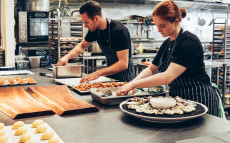
Cooks, Institution and Cafeteria - 35-2012.00
Cooks in institutions and cafeterias are responsible for preparing large quantities of meals according to set menus, dietary guidelines, and food safety standards. They ensure that food is cooked, stored, and served properly while maintaining a clean and organized workspace to provide nutritious and palatable meals to patrons.
-
$35,320/yr
Median Pay -
435,640
Number of Jobs

Cooks, Restaurant - 35-2014.00
A Cooks, Restaurant prepares and cooks a wide variety of dishes according to the menu and customer requests, ensuring food quality and presentation standards are met. They also maintain a clean and organized kitchen, manage inventory, and adhere to food safety regulations.
-
$35,780/yr
Median Pay -
1,412,350
Number of Jobs